Earring Backs: Understanding Issues and Finding the Right Choice
Summary
- Earring backs keep earrings secure, and most fit issues, such as a short post or a loose back, can be fixed easily at home or by a jeweler.
- Common types include push, flat, screw, locking, and silicone backs, each offering a different balance of comfort and security.
- The best one for you depends on comfort, diamond size, material, and how you wear your jewelry every day.
What are earring backs?
Earring backs are small and essential supporting accessories to keep your earring in place securely. They sit behind your earlobe, attached with an earring stick to avoid it slipping out. Most types of earrings like studs, drops, and subtle can fall off without them. The backs not only provide support but also add comfort, ease of wear, and even enhance the overall appearance of your earring, making them complete.
Common Earring Back Issues
Below are some of the points that cover some common Earring back issues faced by customers and their solutions to avoid such problems. Let’s read further to know in detail.
1. The pin is too short; is there any way to fix it?
If the earring post is too short, this issue can be fixed by a professional jeweler. A jeweler will simply shorten or lengthen the earring post as per the requirements. For example, if an earring is 2 carats, then the back length should ideally be 9 to 11 mm, while the ones with smaller carats do require much longer backs. For 0.5 to 3 carat diamonds, the pin has a thickness of 0.9 to 1 mm. To adjust the support, you can ask the jeweler to tighten or increase the length of the back. For children’s earrings with 1 carat, the ideal pin length is 7 to 9 mm.
2. If I order 2 Carat or bigger diamond earrings, is the pin length normally this short?
For 2 Carat diamond earrings, the ideal pin length is typically between 9 and 11 mm. But if you need a longer pin in the future, you can ensure mentioning it in the order notes while placing the order on loosegrowndiamond.com.
3. Unfortunately, it has been discovered that one of the backs of the earrings is very loose. Please advise.
Sometimes, due to random reasons, the back does not lock itself. You might need to slightly push the flower-like portion of the back to make it tighter. The gap at the back is not large; just simply press it, and you will have tightened your earring back.
4. With the earring being exchanged to have the original 12mm post added, I’m wondering if it’s possible to extend the post to 15mm instead?
Yes, it is possible to extend the post to 15mm. The type of earring you have and its construction will determine if a longer post can be successfully attached. You can simply ask your jeweler for the size you prefer.
5. Pushback on my earring is a bit loose and can easily come off. Can it be tightened?
Of course, it is possible to extend the post to get the right fit size. You can opt for the adjustable groove to hold the earring as per comfort and ensure security; a tighter fit would be ideal, so you may plan to wear it all the time.
6. The earring posts are unusually long. Could you please recommend a way to shorten the earring post? I’m guessing it just needs to be trimmed, but would like advice as to the best way to do that.
According to the update from the crafting team, when customers don’t specify the earring back size, we send them with the default size fit. If the post is to be changed to a smaller one, you can also get it done locally. It is a more convenient and faster approach. And if you are not providing the jeweler with the proper size, in this case we go with diamond carat size for appropriate fit.
Why are the backs of some earrings difficult to remove and how can you overcome this?
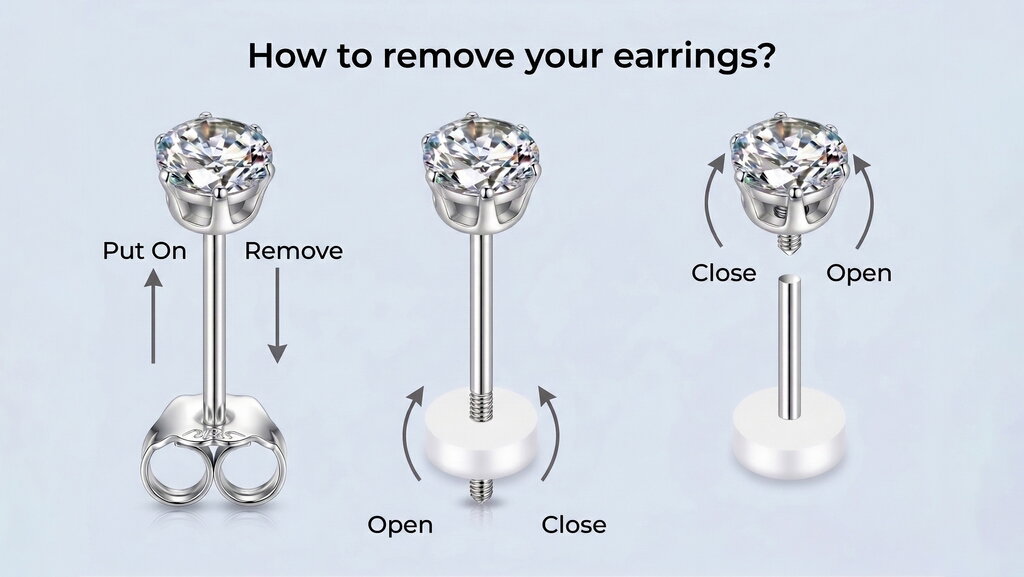
Sometimes earring backs can be a little difficult to remove due to some basic reasons. They might be fastened tightly, metals might be bent slightly, or buildup of oils and skin cells can cause them to stick to the post. These problems can be solved easily with simple measures:
- Wash hands and gently twist the back, pulling it lightly.
- Use warm compression or soak in saline water to loosen the dried oil residues.
- Applying a little rubbing alcohol or oil can help loosen it.
- If you are still not able to remove it, try consulting a doctor.
What Earring Back is Best for You?
There are various common types of earring backs designed to serve different purposes with varied levels of comfort and security. Let’s understand some common types and what they do:
Push Backs:
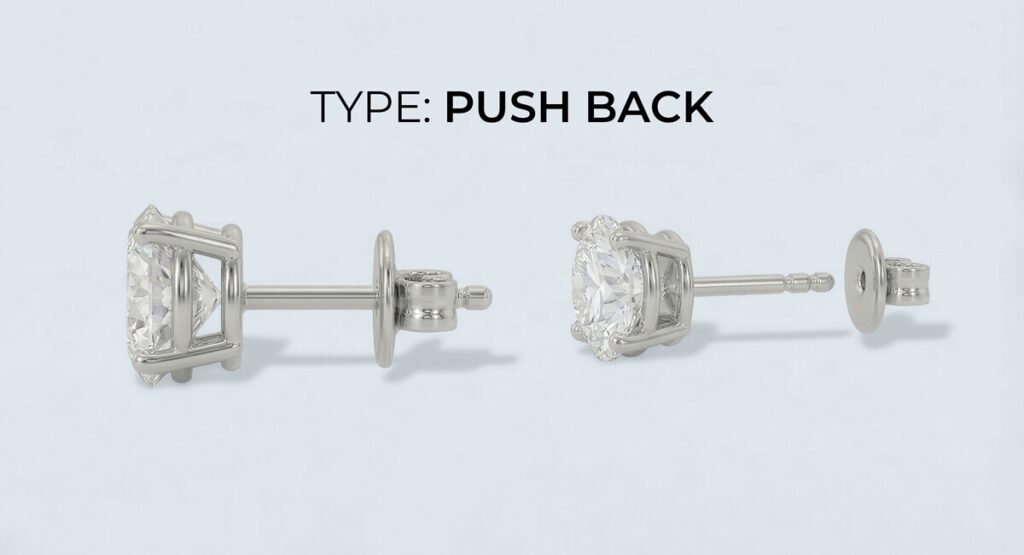
These backs are also known as butterfly or friction backs and most widely used. Push back earrings are easy to wear by simply pushing them onto the earring post to hold them in place with light pressure and more comfort.
Flat Backs:
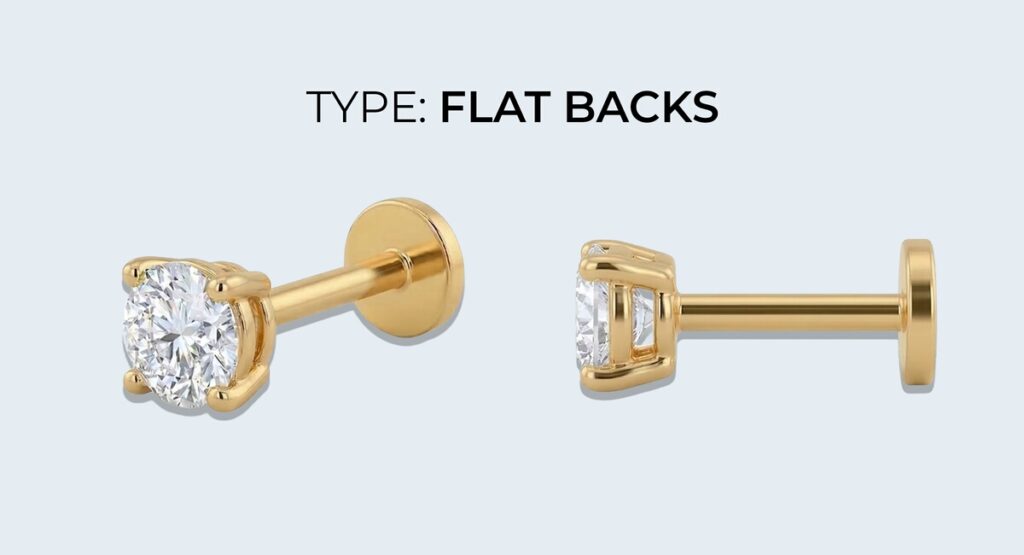
These earring backs are designed with smooth flat surface discs rather than butterflies. They are comfortable for everyday wear, reduce pain, poking, or any irritation, and cause no problem while sleeping.
Screw Backs:
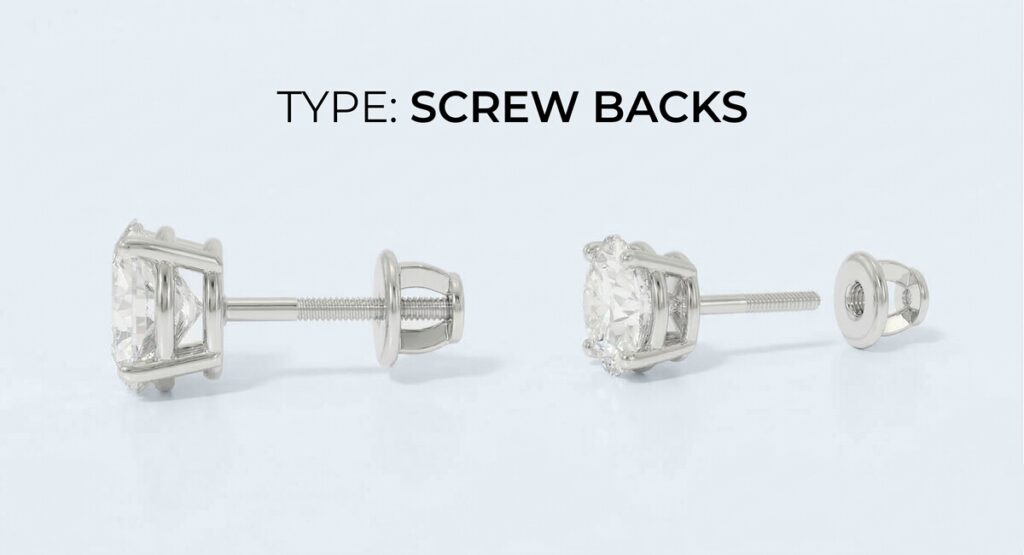
Screw back earrings provide extreme support and security with its mechanism. It goes like a screw to your earring post. Just need to twist it like a screw into the threaded post, making them more secure and hard to remove accidentally.
La Pousette Backs:
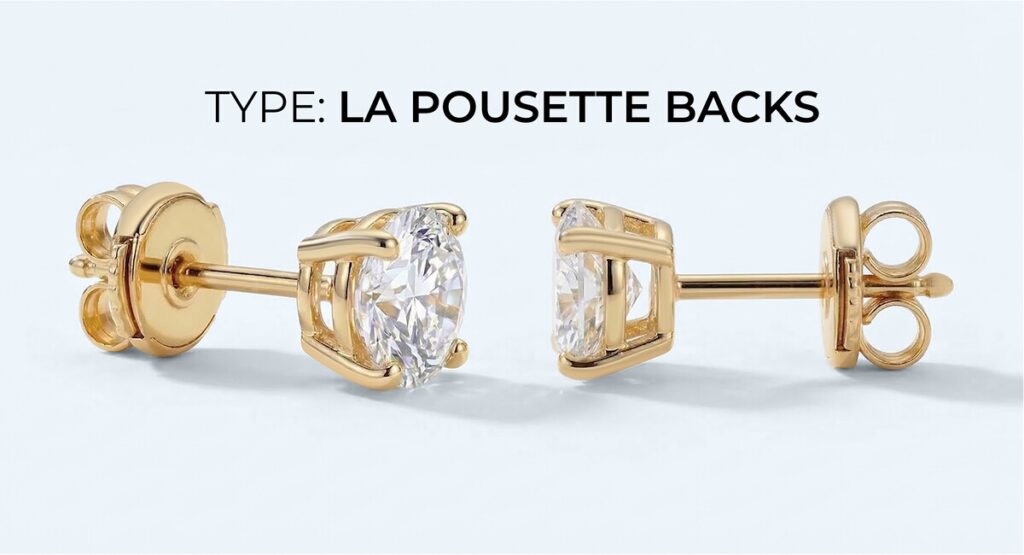
La Pousette backs or locking backs are the types that are securely placed with just one click. They are hard to remove or loosen by accident, easily making them a good choice for expensive earrings.
Silicone Backs:
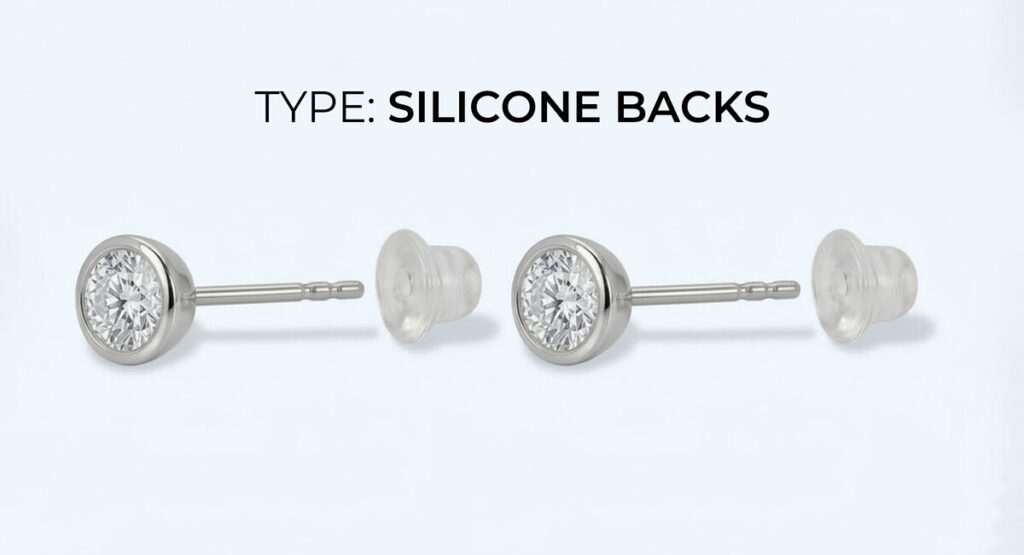
Silicone backs are soft, flexible, and strong, providing the best support without causing any irritation. They contain hypoallergenic properties that reduce the risk of any skin infection.
Hoop and Huggie Earring backs:
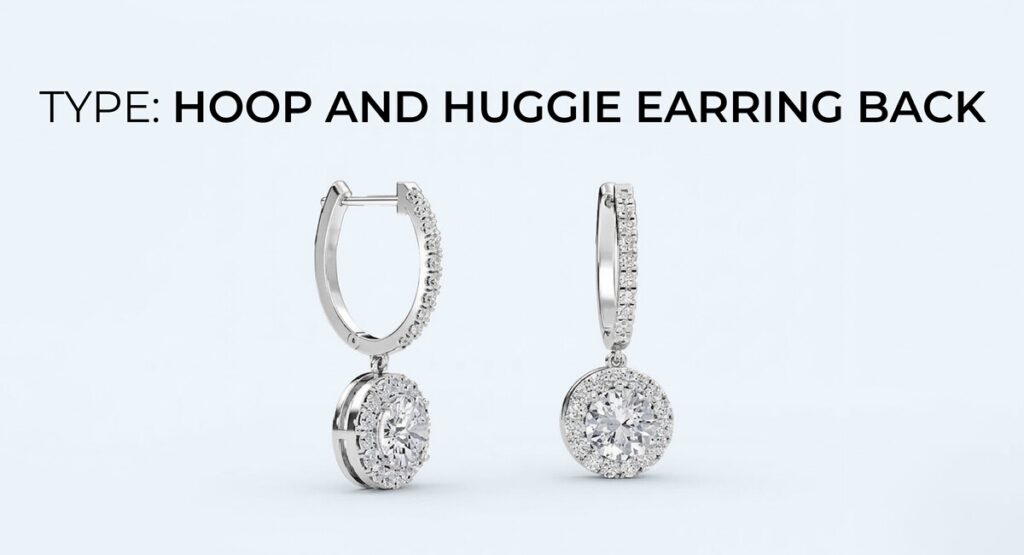
This type of earring back comes with built-in closures like latch backs or hinged clasps. The backs are designed to sit close to eat love that reduces irritation, making them the best choice for sensitive ears.
However, while choosing earring backs, one should consider some important factors that include comfort, diamond carat weight, size, and material. These factors play an important role in providing the right fit for earring backs, ensuring comfort and security. For sensitive skin, try backs with hypoallergenic properties that protect skin from any allergy. Metals like gold and platinum are good for sensitive skin.
Also look at your lifestyle and how you style your everyday jewelry fashion. It also plays an essential role in getting the right earring back fit. If you prefer an active lifestyle, look for backs like screw-fit for secure hold.
Sometimes, due to heavy diamond weight or stone size, earrings tend to bend forward. This generally happens with screw-back earrings due to long earring posts. To avoid such instances, ask your jeweler to cut the extra length of the post, making them shorter, and support them with larger disc-style backs. This will even the weight distribution, eliminating the issue and holding your earring upright.
Conclusion
To avoid such problems it is important to clean your ears and earrings. Ensure that backs are secure, comfortable, and replace them if you have worn-out backs.
At Loose Grown Diamond, we offer stunning, versatile earring backs. Deliver custom design backs to ensure the right fit, security, and comfort for every customer. You can get your personalized earring backs as desired depending on diamond shape, setting style, metal color, size, and engraving, creating the piece you want.
FAQs
How to stop earring backs from hurting?
To stop your earrings from hurting, avoid fastening them too tightly and use hypoallergenic or silicone backs for extra comfort and security.
How to get a stuck earring back off?
To get a stuck earring back off, simply twist the backings gently. If it’s sometimes difficult, use warm water or rubbing alcohol.
How to put earrings back in without hurting?
To put your earring back without hurting, clean it with warm water to soften it. Use a little oil to make it slippery and insert it carefully.
How to remove butterfly back earrings?
Hold the front earring and, with gentle hands, pull or twist the back. Use some oil to fasten the process with ease.
Earring back stuck in earlobe, how to remove it at home?
Removing a stuck earring is easy; just apply a warm compress to soften the back and push it gently. In case of any pain, it is better to consult a doctor.
What type of ear back is more secure?
To get secure earring backs, consider screw backs, locking backs, and silicone backs. You can go for flat backs for comfort.
Lab Grown Diamond Jewelry

Chris Galey
What is a Pave Setting: A…
A secure and reliable setting plays a crucial role in the durable, overall aesthetics and…
A Guide To Perfect Diamond Anniversary…
Just because your commitment and wedding are over doesn’t mean the excitement of getting a…
10 Reasons to Buy Lab-Grown Diamonds
Lab-grown diamonds are setting a different fashion statement in the jewelry world. These are the…
Popular Posts

Recent Posts