A Guide to the Different Cuts of Diamonds
Summary
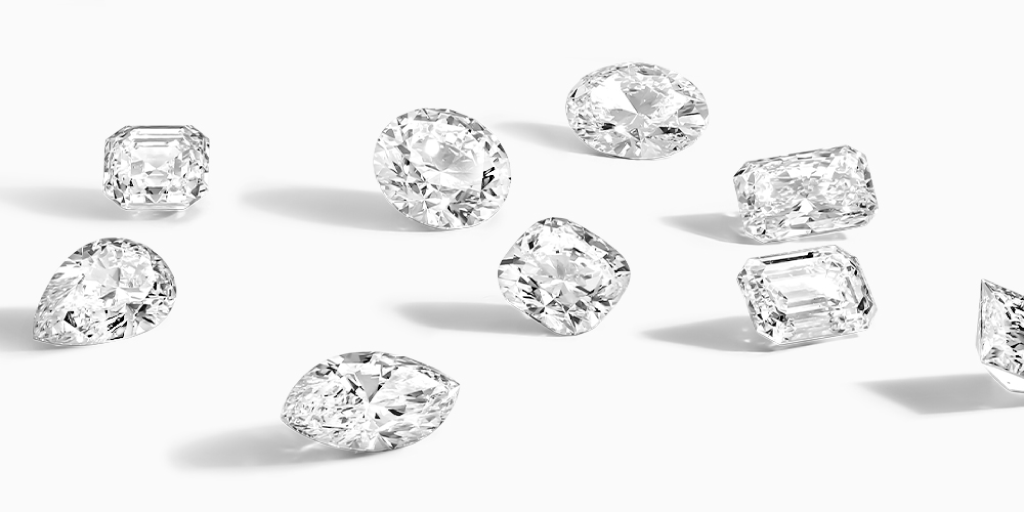
Just like the other characterized facets of diamonds, such as quality, color, and shape, diamonds “Cuts” are also a prominent feature that changes the various dynamics of the diamonds from their creation to their purchase.
In layman’s language, the diamond shape is the initial focus and has been considered chiefly an exclusive feature when making choices. We must look more deeply into the context of diamond cuts to know it better and understand it more profoundly.
In this blog post, we will explore some of the most popular diamond cuts and their unique characteristics.
Different Cuts of Diamond
What does a diamond do to people? Why does it always tend to attract them? What’s that one major factor or feature of diamonds that never fades away?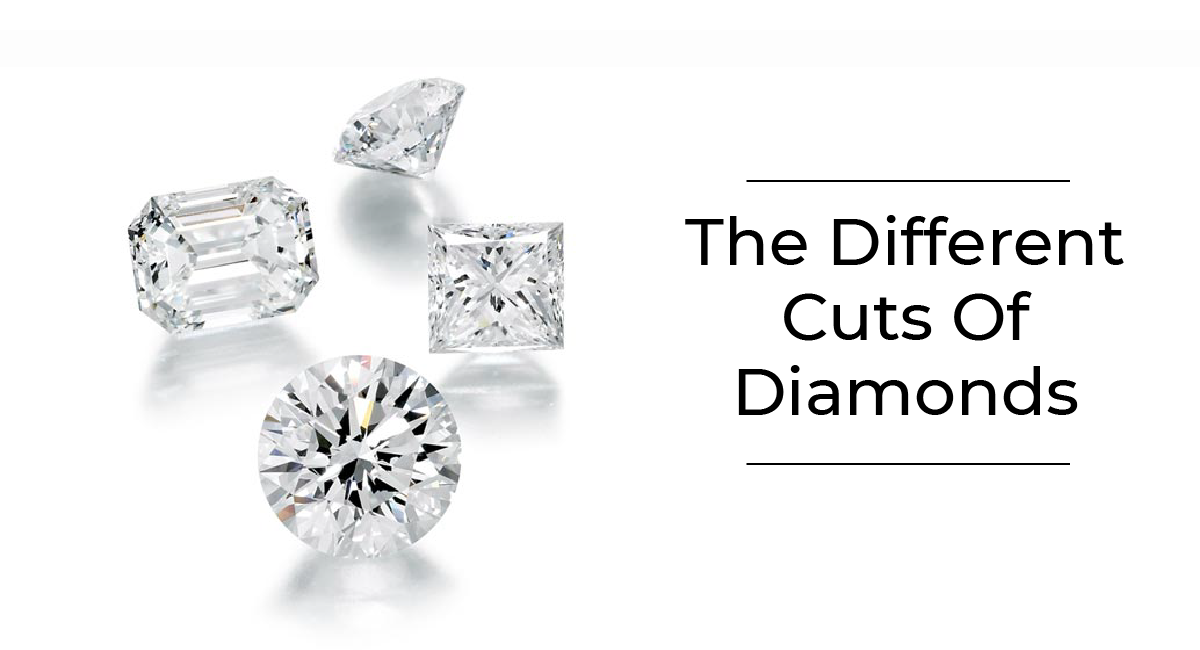
Diamond has its own sparkle and brilliance that reflects the light around them and charismatically attracts people. This is the sole factor that never goes in vain and keeps individuals invested in the beauty of diamonds.
Before the diamond is cut and polished, it is known as a rough diamond, which is highly opaque and is not truly see-through. The rough diamonds contain nil sparkle within them. The cutting of the diamond impacts its light performance and visually enhances the brilliance and beauty of the lab grown diamond.
This cutting procedure is the basic step towards the formation of the diamond and later leads to its shaping and quality framing. Visibility of colors and fire within the diamond is only possible with the cutting of the diamond.
Diamonds are always a go-to choice for people; they love them for all their exquisite brilliance. These gems always stand out on every occasion and complement the bearer, making them look prettier.
The Most Popular Diamond Cuts
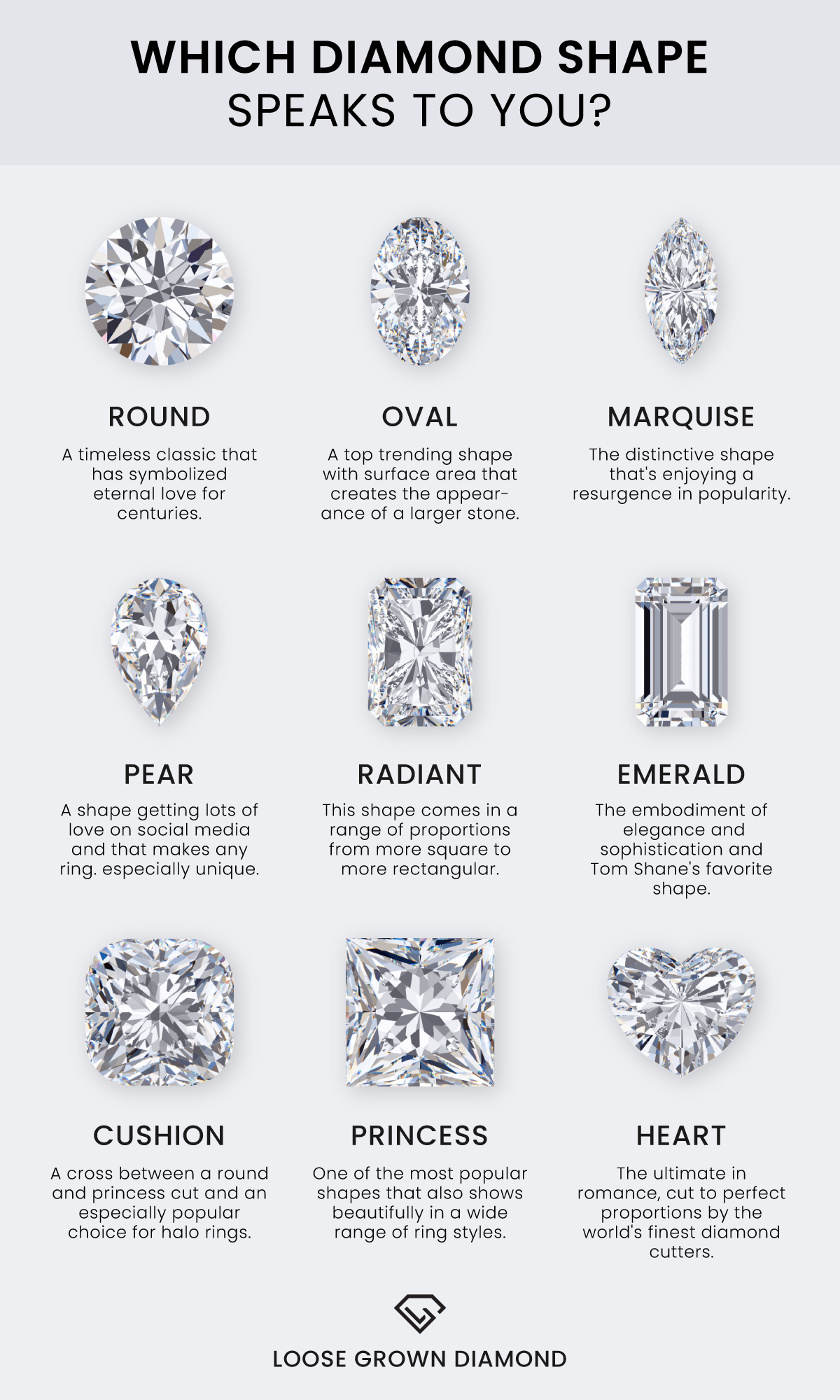
To know more about different diamond cuts and their detailed existence, we have to dig a little deeper. When concluding, people usually confuse diamond “cuts” with the “shape,” which is not beneficial for making a decision. We at Loose Grown Diamond will be giving you the right direction by throwing light on the different cuts of diamonds.
A diamond requires specific characteristics that demonstrate the quality representation of the diamonds, which are the 4C’s: Color, Clarity, Cut, and Carat Weight, which eventually helps in determining the cost of a diamond. Along with these 4C’s, the diamonds are graded within definite ranges, and a graphic representation of the proportions of the diamonds is presented.
Let us get to know about different cuts of diamonds in detail:
Round Cut Diamond
The most popular diamond cut until now. Round cut diamonds are considered real classics that could never go out of style and would always keep increasing their value and worth. Specifically, these diamonds look bigger in comparison with many other diamonds, whereas the cutting quality highlights their brilliance as well.
First, the round cut diamond was created in the 17th century, and after almost 100 years, it started to originate on its own. One thing about the round-cut diamond that always impresses jewelers is that they leave the littlest waste and delivers the maximum value. In the last thirty years, the value of diamonds has been increasing, and the round cut has secured a position as a “favorite” in the hearts of people; the round cut diamond is the best choice for creating a beautiful ring. Round cut diamond rings are gaining popularity among individuals who admire vintage.
Shape
Carat
Cut
Color
Clarity
Price
 round
round 2.60
Ideal
G
VS1
$510
$486
View
round 2.27
Ideal
F
VS1
$519
$494
View
round 2.10
Ideal
G
VS1
$452
$430
View
round 2.10
Ideal
G
VS2
$454
$432
View
round 1.75
Excellent
H
VS1
$416
$396
View
Asscher Cut Diamond
The Asscher cut diamond was created by Joseph Asscher in 1902, and so it was named after him, as he had a patent put up on his unique design. This cut is rare; as opposed to flaunting its brilliance and fire, it emphasizes the clarity of the diamond. Precisely, the luster and clarity of the diamond are the main focus, whereas it has its own brightness from within.
It has a symmetrical geometry that also secures its vintage style inspired by the Art Deco Era. This cut has a variedly structured design with an unusual facet pattern that makes it more appealing to the masses, and it is found rarely. These diamonds are in high demand these days, as they give a unique look to Asscher cut diamond rings.
Shape
Carat
Cut
Color
Clarity
Price
 asscher
 1.52
Ideal
I
VVS2
$528
$503
View
asscher 1.50
Ideal
D
VVS2
$402
$383
View
asscher 2.54
Ideal
G
VS1
$628
$598
View
asscher 2.22
Ideal
D
VVS1
$666
$634
View
asscher 1.57
Excellent
G
VS1
$464
$348
View
Emerald Cut Diamond
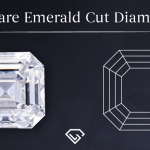
The Emerald cut diamonds invention dates back to the 1500s when the creators came across this design and gave it a stylistic approach. It is one of the oldest diamond shapes that is structured as a rectangular cut with cropped corners; this gives it an edgy, sharp, and bold look. Its popularity soared during the Art Deco period, especially due to its geometric shape and eye-catching formation.
During the 13th century, the ‘step-cut’ was formed after various experimental cuttings that had a bit of octagonal structure and later evolved into this emerald cut. Within the emergence of the 19th and 20th centuries, people’s choices were found to align with this cut, and now it has secured a position in the market due to its elongated shape. It emphasizes clarity rather than sparkle, creating a unique and elegant appearance, and its unique emerald cut diamond ring designs are creating a fresh appeal.
Shape
Carat
Cut
Color
Clarity
Price
 emerald
 2.09
Ideal
F
VVS1
$503
$479
View
emerald 2.52
Ideal
G
SI1
$522
$497
View
emerald 2.21
Ideal
E
VVS1
$655
$624
View
emerald 2.50
Ideal
D
VS2
$512
$488
View
emerald 2.43
Ideal
G
VS2
$504
$480
View
Princess Cut Diamond
The princess cut diamond finds its existence with the origination of a Barion Cut patented in 1971 by the creator, who named it after himself and his wife. The cut is highly recommended to those who desire the same brilliance and fire as that of a round cut diamond, but that too in a square shape.
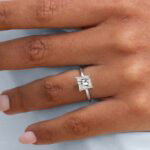
The princess cut diamond can be square-shaped as well as rectangular shaped too but the most chosen shape is square cut as it marks the uniqueness. Princess cut diamond rings have numerous facets that enhance their brilliance, making them a popular choice for engagement rings.
Shape
Carat
Cut
Color
Clarity
Price
 princess
 2.51
Ideal
J
VS2
$10071
$9591
View
princess 1.97
Ideal
E
VS1
$396
$377
View
princess 2.01
Ideal
H
VVS2
$453
$431
View
princess 2.03
Ideal
D
VVS1
$477
$454
View
princess 2.49
Ideal
F
VS1
$520
$495
View
Cushion Cut Diamond
The cushion cut is a modern-day design that traces back its existence to the old mine cut, which was found around the 1700s, but after a lot of digging and mining, it began to dry up, and later the cushion cut diamond was formed. It hides its inclusions very well and has a very soft, pillow-like formation that withholds less brilliance but has its own fire, which is its most appealing feature.
This cut highly interests vintage and aesthetic stylists and portrays the feminine look. It also looks a bit smaller than other diamonds when looked at from the top due to its deeper cut and extra weight under the girdle of the stone. The cushion cut diamond ring is becoming increasingly popular among those who appreciate vintage and aesthetic styles.
Shape
Carat
Cut
Color
Clarity
Price
 cushion
 2.59
Ideal
E
VVS2
$690
$657
View
cushion 2.08
Ideal
E
VVS1
$537
$511
View
cushion 1.60
Ideal
D
VVS2
$600
$571
View
cushion 1.56
Ideal
E
VVS2
$346
$330
View
cushion 2.07
Ideal
E
IF
$1066
$1015
View
Radiant Cut Diamond
The radiant cut was first made in New York in 1977, but it didn’t get a hold of urgent success, and later in the years it exploded by securing the center stage and sidelining the brilliant round cut diamond. This time, there was no compromise either on the formation or the brilliance.
It was structured in square and rectangular shapes, enabling higher brilliance. It is a classic that always keeps your ring standing out from the crowd, and the radiant cut diamond ring gives a unique, impactful design.
Shape
Carat
Cut
Color
Clarity
Price
 radiant
 2.50
Ideal
F
VS1
$570
$543
View
radiant 2.52
Ideal
D
VVS2
$672
$640
View
radiant 2.47
Ideal
D
IF
$1026
$977
View
radiant 2.52
Ideal
D
VVS2
$642
$611
View
radiant 2.01
Ideal
D
VVS2
$916
$872
View
Oval Cut Diamond
The oval cut is an elongated version of the Round cut diamond that elegantly follows almost all the similar features, which makes the hands of the wearer look a bit different and slender. It never loses its classic elements and maintains a vintage look throughout.
It is less expensive than round cut diamonds due to its sparkly feature and has this timeless yet sophisticated vibe. Typically, they are 20% less expensive in comparison to other diamonds, making them a splendid choice.
Shape
Carat
Cut
Color
Clarity
Price
 oval
oval 1.92
Ideal
E
VS1
$422
$402
View
oval 2.04
Ideal
I
VS1
$1166
$1110
View
oval 2.26
Ideal
E
VS1
$558
$531
View
oval 1.55
Ideal
G
VS1
$342
$326
View
oval 2.01
Ideal
D
IF
$692
$659
View
Heart Cut Diamond
The heart cut diamond made its debut in the year 1463, which states its deep-rootedness and ancient history, and undoubtedly symbolizes the eternal love amongst partners. Earlier, the cut was popular amongst the royal families, that too for exchanging it as a means of goodwill.
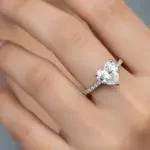
It is primarily a brilliant cut only, which is later molded in a heart shape but consists of the same brilliance and sparkle within it. It is generally 15-20% cheaper, and one can have a larger diamond in shape with this cheaper rate as well, precisely in comparison with a round cut diamond. A heart cut diamond ring symbolizes romance and affection, making it a sentimental choice for expressing love and adoration.
Shape
Carat
Cut
Color
Clarity
Price
 heart
heart 1.54
Ideal
E
VS1
$488
$366
View
heart 1.78
Ideal
D
IF
$1123
$842
View
heart 2.54
Ideal
D
VVS2
$1044
$783
View
heart 2.54
Ideal
D
VS1
$923
$692
View
heart 1.51
Ideal
D
VVS1
$620
$465
View
Marquise Cut Diamond
The marquise cut diamond has a unique story to its origin, and it dates back to the 18th century, when King Louis XV of France demanded that one of the jewelers create a uniquely shaped diamond that would be similar to the shape of the lips of the king’s mistress. The diamond kept evolving and has become what we have now.
It was also named after the king’s love, which is sometimes called ‘Navette Cut’ by the jewelers. It has a tapered Oval shape with pointed ends, which is suggested to be “old school,” but that doesn’t mean it can’t be stated as a symbol of modernity and must be included in evolution, as styling is always dynamic and could be put forth with a lot of unexpected elements.
A marquise cut diamond ring offers a distinct and elegant appeal, perfect for those seeking a unique and glamorous piece of jewelry.
Shape
Carat
Cut
Color
Clarity
Price
 marquise
 2.51
Ideal
E
VVS2
$2176
$2072
View
marquise 2.60
Ideal
G
VVS1
$838
$798
View
marquise 1.52
Ideal
E
VVS1
$417
$397
View
marquise 2.58
Ideal
G
VS1
$456
$434
View
marquise 1.72
Ideal
F
SI1
$637
$607
View
Pear Cut Diamond
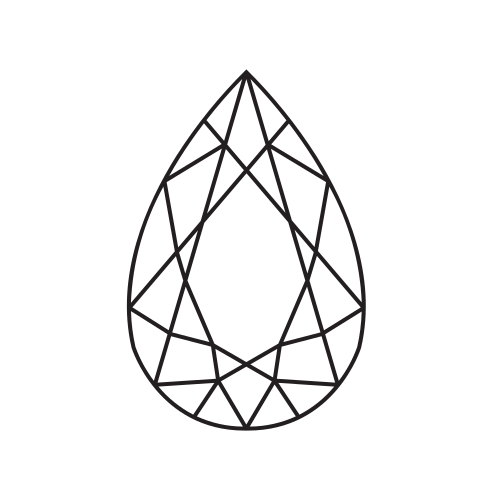
The pear cut diamond originated in the 1400s in Flanders by a Flemish diamond cutter and polisher. It is considered to be a vintage jewel and is highly popular for engagement rings that sparkle a lot and have utter brilliance. Only about 4% of diamonds found in the market are evaluated for their rarity.
However, people don’t like it much and prefer not to buy it due to its small size and lumpy sides. Also, the bow tie within it is considered to be an ill inclusion. The diamond, however, produces less waste while cutting, so it is cheaper than the other diamonds.
Shape
Carat
Cut
Color
Clarity
Price
 pear
pear 2.03
Ideal
E
VVS1
$1219
$1161
View
pear 1.84
Ideal
D
VVS2
$1172
$1116
View
pear 2.58
Ideal
G
SI1
$7394
$7042
View
pear 2.38
Ideal
D
VVS1
$1483
$1412
View
pear 2.25
Ideal
E
VVS1
$579
$551
View
Old European Cut Diamond
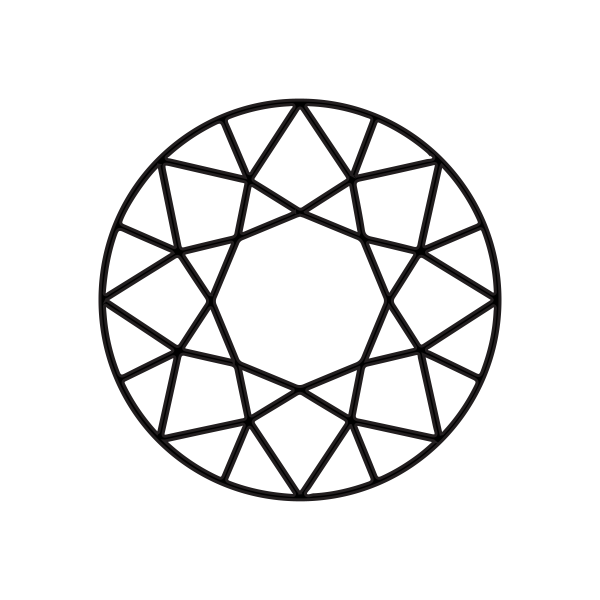
The old european cut diamond was first handcrafted from 1890 to 1930 and remained extremely popular in the 1900s amongst almost all classes. During the Art Deco Era, their popularity grew continuously. They are also considered the predecessors to one of the most popular diamond cuts in the present, which is the round cut diamond.
The diamond was cut in a way where it was a deeper cut, high crown, and a small table surface over the top with fewer facets to it. Making it one of the antique diamond cuts of all time.
Shape
Carat
Cut
Color
Clarity
Price
 old european
 2.87
Ideal
F
VS1
$1281
$1220
View
old european 4.00
Ideal
F
VS2
$1942
$1850
View
old european 1.53
Ideal
E
VVS2
$1047
$997
View
old european 2.02
Ideal
H
VVS1
$1088
$1036
View
Baguette Cut Diamond
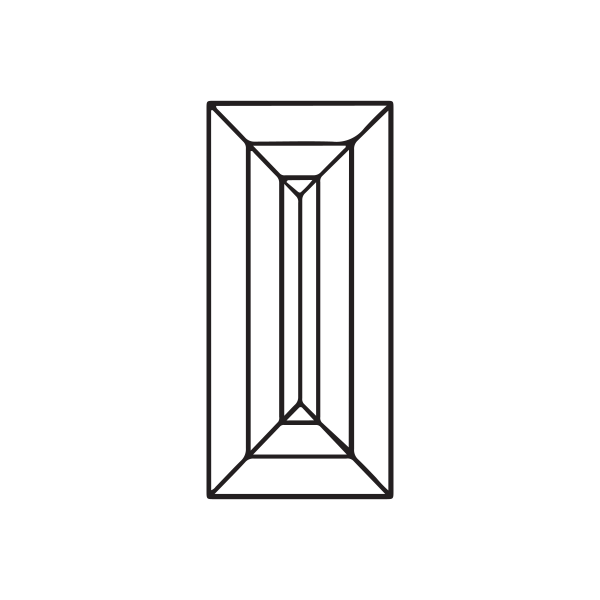
The baguette cut diamond was created from the rectangular step-cut diamond, which evolved from the hogback, which was an elongated cut explored during the mid-16th century. During that era, it was widely used to form monograms or jeweled letters, precisely the initials of names. “Baguette” is a French word; it is a kind of bread that is elongated in shape, and this name has been derived from it.
This diamond cut has a vintage nostalgia emotion leading back to the Art Deco Era that is exceptionally alluring. The lab diamond is highly expensive due to its tough composition, as it is sustainably difficult to match the sizes and cut from a rough diamond, but it is still worth it.
Shape
Carat
Cut
Color
Clarity
Price
 baguette
 1.34
Ideal
G
VS2
$339
$323
View
baguette 1.53
Ideal
E
VVS2
$571
$428
View
baguette 1.23
Ideal
F
VS1
$309
$232
View
baguette 1.10
Ideal
E
VVS2
$323
$242
View
baguette 1.50
Ideal
E
VVS1
$607
$455
View
What is the Difference Between Diamond Cuts and Diamond Shapes?
The diamond cut refers to how well a diamond is cut to maximize its brilliance and light performance, while the diamond shape refers to the physical outline or external appearance of the diamond, such as round, princess, or emerald shape. The cut of a lab grown diamond is referred to and understood with its facets, symmetry, dimensions, and reflective measures, and the shape remains as an outlining structure of the particular diamond.
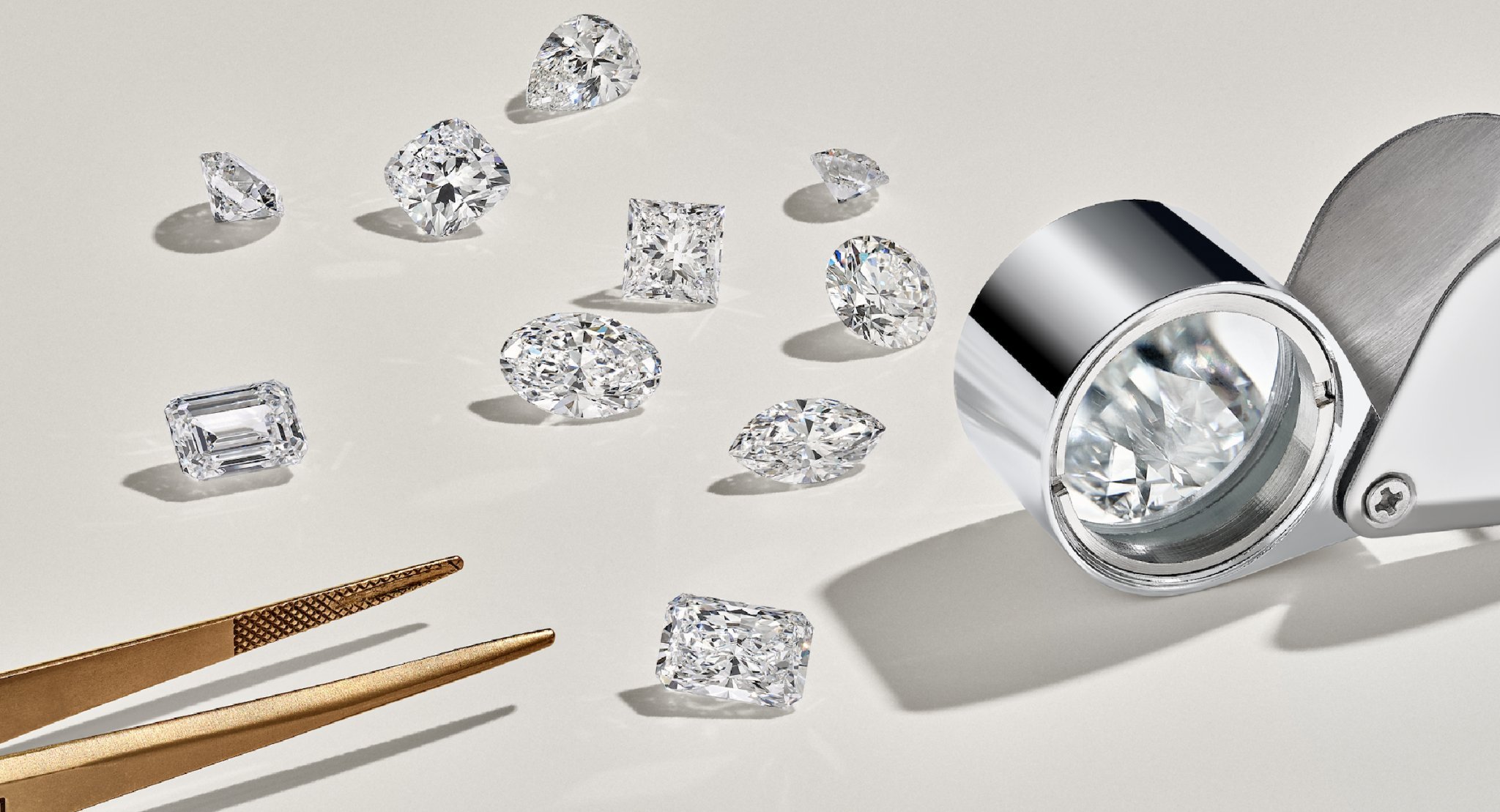
For instance, let’s try to understand it in an easier way: think of any diamond cut, be it a trillion cut diamond; it might be shallow or deep, dull or brilliant, and even highly symmetrical or lumpy, but these all factors directly affect the diamond cut and have no effect on its shape. It remains triangular with only various inclusive changes to its formation.
Both elements are different, but they highly impact the overall creation and worth of the diamond, which also plays an important role in choosing one.
The Most Expensive Diamond Cut
The most expensive diamond cut around the world is the round brilliant cut diamond, as it wastes most of the rough stone during the cutting procedure; almost 60% of the diamond is wasted. It is a precious stone that emits its sparkle and radiation, which highly reflects light and makes it a crowd-pleaser. The light performance of the diamond is also a factor of interest and must be highly considered.
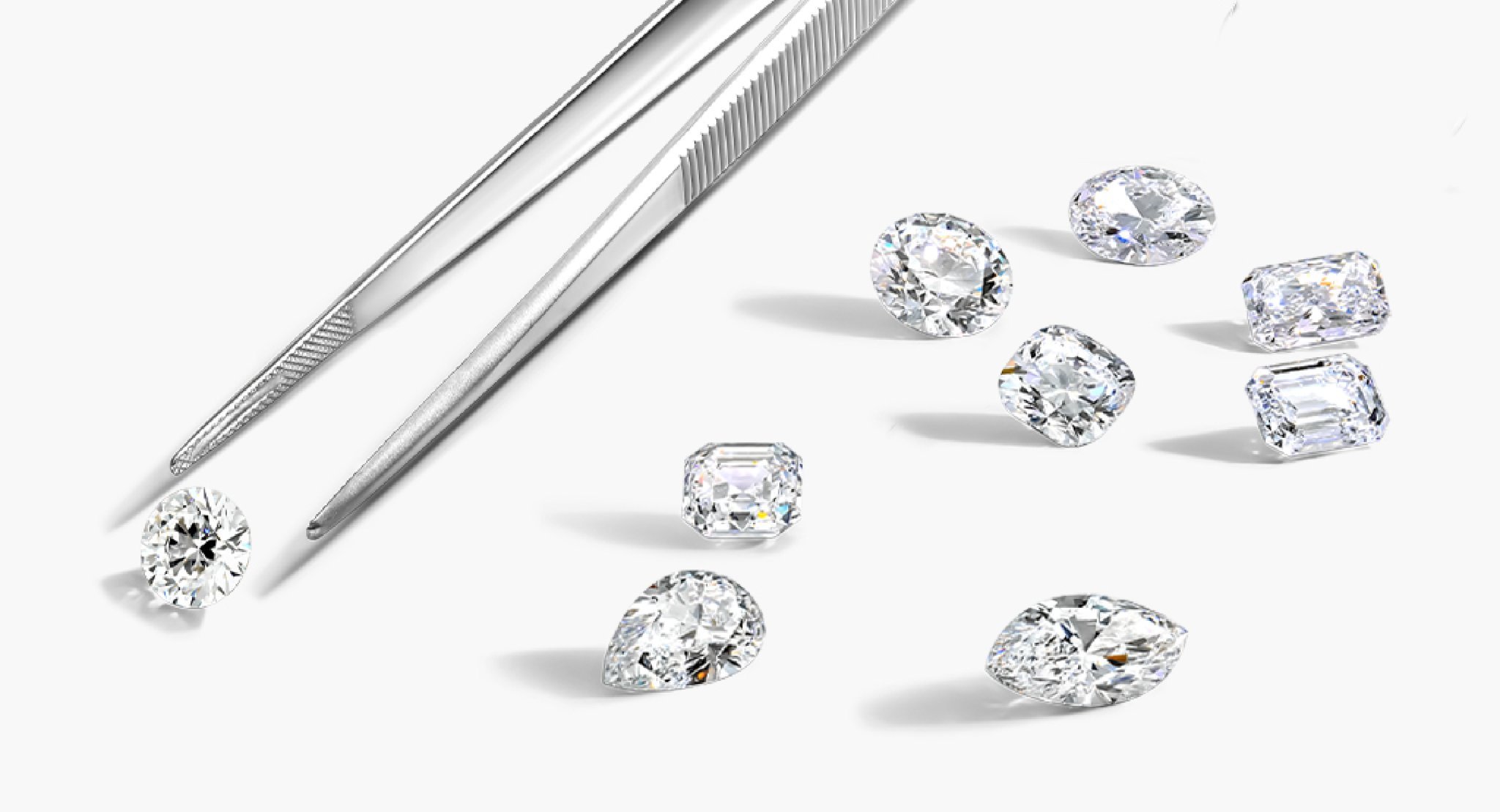
Any of these factors is highly impactful due to its cut, as that only brings out the formation of the diamond and enhances its appealing style. It is a classic shape that runs through generations and never loses its real worth, which also makes it exceptional from the other diamonds.
Which Diamond Shape Looks Biggest?
Some other diamonds that also run in the race to look larger than their usual appearance are round diamonds, Marquise, Pear, Oval, and Emerald cuts, whereas all of these are classic styles that have existed for a very long time and have developed a greater interest in the minds of people.
All of these cuts are elegant and have a greater impact when chosen as a center and sole diamond. Other than these varied cuts, a diamond in a ring can also look bigger with various prescriptive settings.
Cut Grades
In layman’s language, grading simply means the act of classifying on some specific scaling/metric, which could be based on the quality of the diamonds. Diamond cut grade is based on several factors, including symmetry, polish, brilliance, and fire, which can only be determined while under magnification. It helps you identify all that you must know about the diamonds, such as their rarity and the measurement of reflection it carries within themselves when light hovers through them.
Cut grades vary from excellent to poor, which highly and specifically means that if the diamond has greater factors, they are good enough, but if the quality has deteriorated and you get the least of anything, it is similar to a mere stone, which is poor in quality.
Tips for Selecting the Best Diamond Cut for Your Engagement Ring
Knowing the depth of the different diamond cuts is a necessity, but there are other factors as well that collide while purchasing a precious lab diamond, precisely the engagement ring. Let’s have a look at a few quick tips to follow in order to have a better purchase:
Get to know about the 4Cs in a diamond.
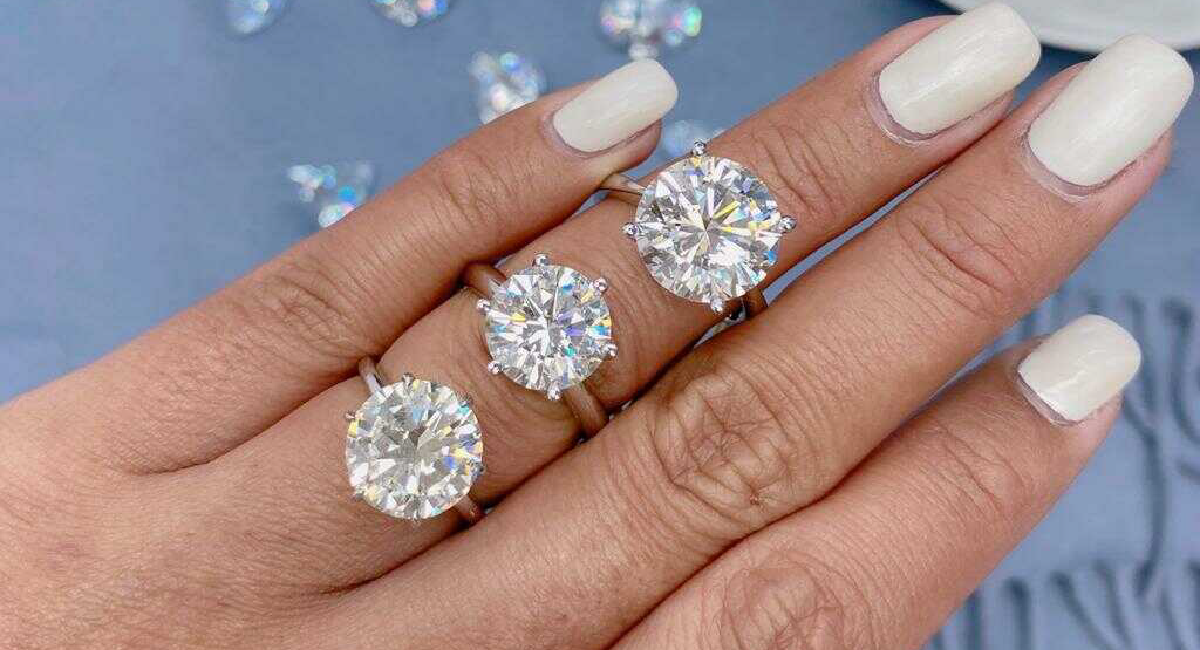
It is a very easy concept but confusing as well, so have a better look at it to have a much better understanding of lab diamonds, because it is the basic form & structure of diamonds.
Learn about various cut and shape styles of the diamonds differently. Never forget that a lab diamond cut is different from diamond shapes. Study the various metals, their availability, quality, and prices, and choose one of the best.
Lastly, have a budget in mind and revolve around it, because we believe that even with the lowest budget, one can have the desired choice. You can use our diamond price calculator to determine the right price for your diamond. Explore exclusive savings with our promo code when elevating your loose grown diamond shopping experience.
[perfect_ring_box title=”Ready to create your perfect ring?” btn1ttl=”Start with a Setting” btn1url=”https://www.loosegrowndiamond.com/build-a-ring”]
Conclusion
When we exclaim “best,” it is simply your style, liking, and budget that makes it one, nothing that others choose for you. We only recommend them.
Diamonds are, anyway, the greatest investments of all time, and one must have a sense of belongingness attached to them. They are a one-time investment for the ages and later run through generations, in a tone of generic terms. Types of lab grown diamond cuts are indeed a factor to be known, but it should never be the “only” factor to be indulged in; know a bit about all to have a better perspective, and considering these factors will assist you in finding the ideal engagement ring.
FAQs
What are the different diamond cuts?
The different diamond cuts include round brilliant, princess, emerald, asscher, cushion, oval, marquise, pear, radiant, and heart-shaped cuts.
What are the most popular diamond cuts?
The most popular diamond cuts include the round brilliant cut, princess cut, and cushion cut.
Which diamond cut offers the most sparkle?
The round brilliant cut is known for its exceptional sparkle and brilliance due to its precise facet arrangement and optimal light reflection.
Are certain diamond cuts more expensive than others?
The price of a diamond is influenced by various factors, including the cut. Generally, fancy shaped cuts like emerald, Asscher, and marquise cuts can be more expensive compared to round brilliant cuts.
Which diamond cut is best for an engagement ring?
The best diamond cut for an engagement ring depends on personal preference. The round brilliant cut is a classic and popular choice, while other cuts like princess, cushion, and oval offer their own unique appeal.
Can diamond cuts affect the diamond’s perceived size?
Yes, diamond cuts can influence the perceived size of a diamond. Certain cuts, like the oval or pear, can create an elongated appearance that makes the diamond appear larger than its actual carat weight.
Cut, Knowledge Base, Lab diamond

Chris Galey
Taylor Swift Engagement Ring: Story of…
August is the month of celebrities announcing their engagements, and one more has been added…
What Diamond Shape Looks Bigger for…
Choosing an engagement ring is one of the most important and meaningful decisions of your…
A Guide to Choosing Hypoallergenic Jewelry…
Have you ever noticed red, itchy skin appearing right after putting on new earrings or…
Popular Posts
Recent Posts