Knowing the Role of Facets in Diamond Brilliance

Summary
What are Diamond Facets?
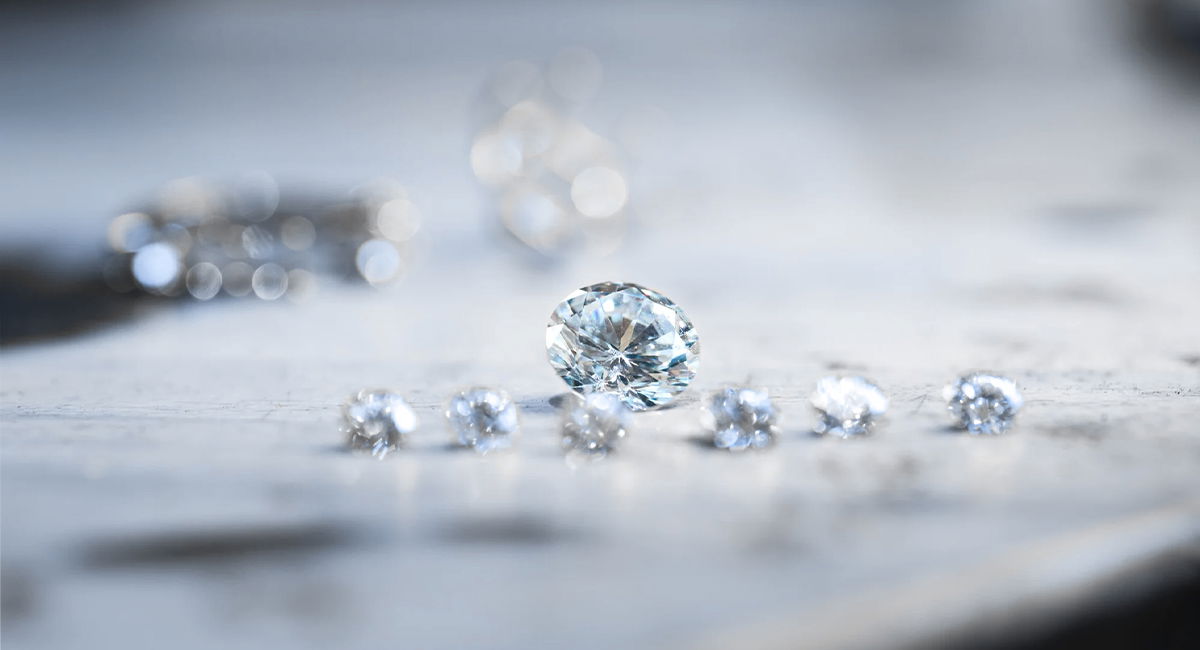
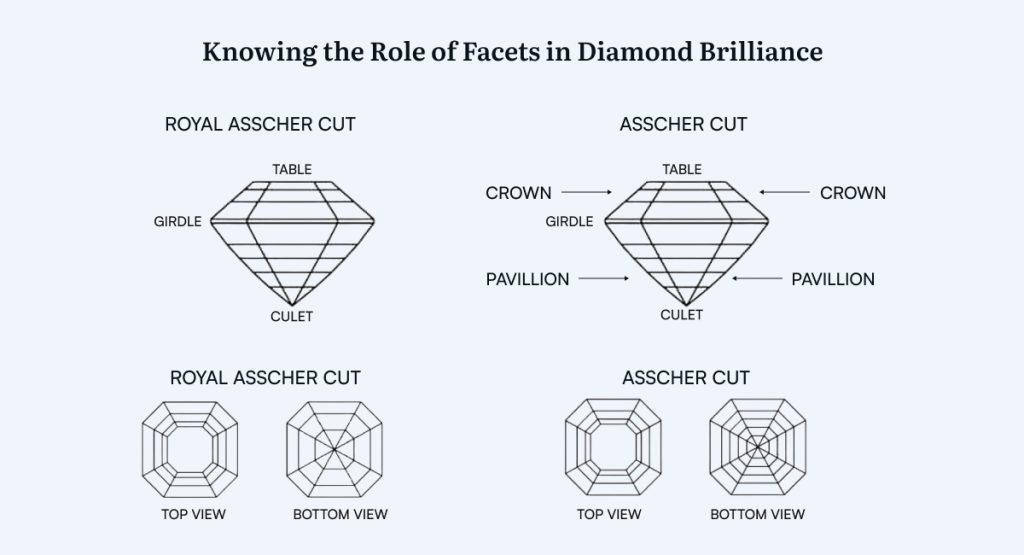
Diamond facets mean a well-cut flat surface on the diamond arranged in a symmetrical manner that acts as a mirror for the entering light in the gemstone. The facets of a diamond can be divided into 3 parts that comprise a crown, a pavilion with a culet, and a girdle in the center. The diamond facets are one of the factors that allow the light to reflect more, casting a beautiful shine on the diamond. Pavilion and crown facets have a great impact on the dispersion of light.
What are the Different Types of Diamond Facets?
Variety in facets is due to their different purposes based on the cut style, shape and location of the facets on the diamond. For an optimized shine and sparkle, each facet is arranged in a calculated geometrical pattern to get an impactful light reflection. Let’s read further about the types of diamond facets that are a part of the Anatomy of a diamond.
- Table Facet: A horizontally placed and biggest facet on the surface of the diamond is a table facet. This facet allows a good view of the diamond’s inner description, letting more light enter the diamond for an amazing shine.
- Crown Facet: The most visible and top portion of a diamond is the crown facet. This facet is considered the diamond window, permitting more light to enter. The crown facet consists of frames that separate the elements, impacting the dispersion of light for more sparkle.
- Girdle Facet: The narrow outer cover of a diamond that divides the crown and pavilion is the Girdle facet. This part of the diamond can be rough, polished, or faceted in appearance. The diamond’s look, durability and value are affected by this type of facet.
- Pavilion Facet: The bottom part of the diamond, located just below the girdle, is the pavilion facet. The crown facet allows the light to enter, and this pavilion facet reflects the entering light through the crown. This facet reflects light to provide more shine and sparkle to the diamond.
- Culet Facet: Similar to the table facet, the culet is a single facet located opposite the table and at the foot of the pavilion. A diamond might have a culet so sharp and meeting to a point or have a cut as a flat surface affecting the light. If the flat surface is wider, it is called a knee, like in emerald cut diamonds.
Understanding The Diamond Polish, Symmetry, and Light Performance
Understanding the diamond polish, light performance, and symmetry of the diamond’s facets are crucial aspects to interpret the overall beauty and shine of a diamond. Let’s see a brief explanation of these terms.
Diamond Polish produces the smoothness on the surface of a diamond with its seamless cuts. If a diamond has a well-polished surface, it might have fewer blemishes, which permits the light to enter and reflect effectively, heightening the brilliance level of the diamond.
The accurate degree of alignment and placement of the diamond facets is known as diamond symmetry. The flawless symmetry of the diamond’s facets brings an enhancement in the brightness and its capacity to reflect light.
Performance of light showcases the management of reflection of white light for brightness, color dispersion for fire, and the sparkle of a diamond. A diamond’s polish and symmetrical arrangement of its facets are responsible for an effective light performance, casting a unique shine.
How Many Facets Does a Diamond Have?
The number of facets in a diamond varies depending on the shape and cut style. The table shows a brief idea of the number of facets in different diamond cuts and how they affect the brilliance of the diamond.
| Shape of Diamond | No. of facets |
Type of Cut |
Description |
| Round Brilliant | 58 | Brilliant cut | The most popular Round Brilliant cut diamond is equipped with 58 facets that enhance the brilliance and fire of the diamond |
| Princess | 50-58 | Brilliant cut | Princess cut diamonds have sharp pointed corner facets, giving a shiny appearance |
| Radiant | 70 | Brilliant cut | Radiant cut diamonds have an elongated look with smooth curved edges with brilliant facets for a versatile look. |
| Asscher | 57-58 | Step cut | This vintage shape has 58 step cut facets in its design. These step cuts resemble a staircase pattern, adding elegance and sophistication |
| Cushion | 58 | Brilliant cut | Square-shaped diamond with smooth curved corners, large facets giving a unique charm to the diamond |
| Oval | 57-58 | Brilliant cut | Equipped with 58 facets, this diamond has an elongated look to enhance the brilliance and give a larger diamond visual |
| Emerald | 50-58 | Step cut | Emerald shaped diamonds are rectangular, elongated stones with step-cut facets and cropped edges. The stepped facets show a mirror effect, making it more sparkling |
| Pear | 58-71 | Brilliant cut | It is a mixture of round and marquise shapes with one side rounded and the other pointed. The facets of this diamond give a longer look |
| Marquise | 56-58 | Brilliant cut | This shape resembles an eye with two pointed ends and long, narrow body. The triangular facets of this shape maximize the carat weight with a longer look |
| Heart | 56-58 | Brilliant cut | It has a rounded top with a cleft acting as a symbol of love and romance, with its excellent brilliance |
The above table is an overview of the diamonds and the number of facets depending on the cut and shape. Each type of facet shows a distinctive look for different shapes of diamond, maximizing the shine and brilliance.
How Do Diamond Facets Impact the 4Cs?
Diamond facets play a significant role in how the 4Cs: Cut, Clarity, Color, and Carat will affect the overall aspect of the diamond.
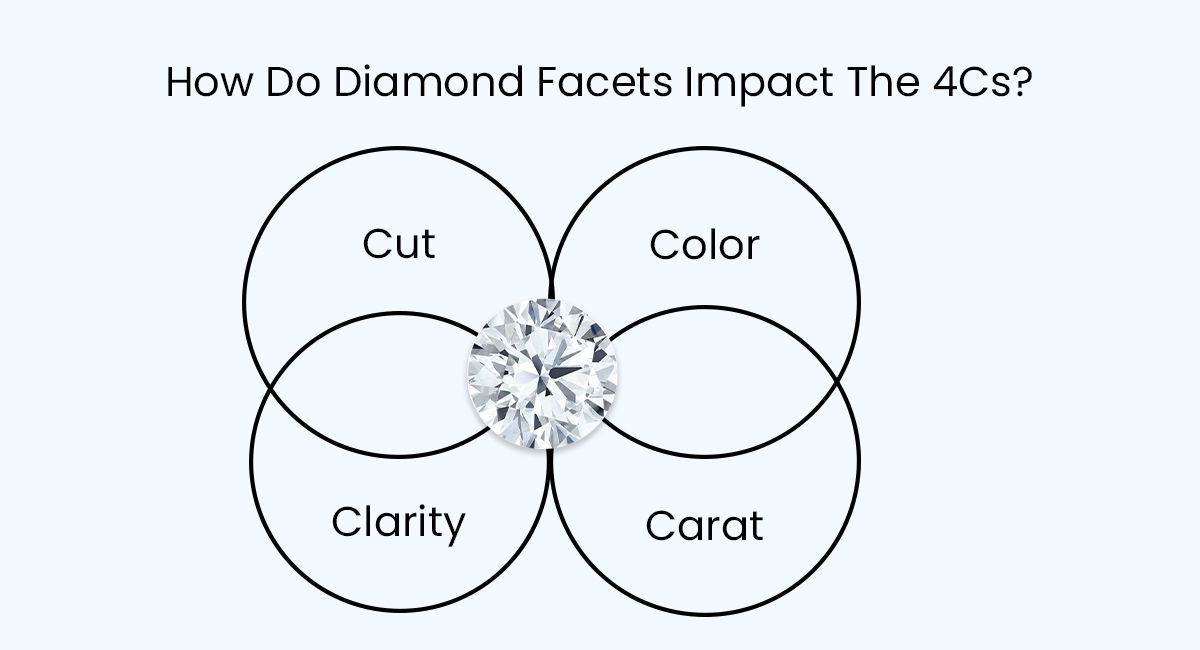
Cut: The cut aspect has a direct impact on the look and quality of a diamond. If a diamond has well-structured facets, then it will allow more light to reflect and refract, making it shine more. A poorly cut facet reduces the brightness, and the diamond looks dull.
Clarity: Facets are also the reason for the visibility or concealment of blemishes and other internal inclusions in the diamond. If a diamond has symmetrical facets, it will work well in hiding the flaws, improving the clarity of the diamond.
Color: Facets are accountable for hiding or revealing the color of the diamond. A diamond with finely cut facets can effectively hide the yellow hue of the diamond, making it brighter.
Carat: Facets do not have a direct impact on the carat weight, though it makes the diamond appear bigger. Having an effect on the light dispersion can make a low-carat diamond look bigger.
Can Diamond Cut Affect Its Price?
Yes, diamond cuts do affect the price of the diamond. A finely cut diamond exudes more light, making it brighter and enhancing its overall appearance, which significantly increases its value. While choosing a diamond, look for an ideal to excellent cut; ensure that the diamond has a high cut grade with the right facet structure.
Conclusion
Facets play a crucial role in the overall diamond aspect. Loose Grown Diamond ensures well-cut facets in their diamond that make them shiny and brilliant. Understanding the facets and their properties helps you to get the best deal within your budget.
FAQs
Are diamonds with more facets considered more valuable?
No, diamonds with more facets are not always considered more valuable; rather, it depends on the quality of the cut and proportions.
What Is the most affordable diamond cut?
The typical diamond cuts that are affordable are oval, cushion, emerald, and princess cuts.
Is a round brilliant cut more sparkly than other shapes?
Yes, you heard that right: the round brilliant cut is more sparkly compared to other shapes. The round cut of this diamond shape gives it more facets that create more sparkle, enhancing the brilliance.
What is the most expensive diamond cut?
The most expensive diamond cut is a round brilliant cut, as it has numerous facets, which is due to its precision in cuts. This shape is popular in the market, making it the most sold shape. This cut has more demand due to its ability to shine exceptionally, making it more expensive.
How can I tell if a diamond’s facets are well–cut?
A diamond with well-cut facets tends to shine more and has excellent brilliance. When the facets are cut in proper symmetry, more light is reflected, increasing the shine and fire.
How many facets does a diamond have?
The number of facets in a diamond depends on its shape and cut. A well-cut diamond with proper facets will sparkle more. On average, a diamond has 58 facets, allowing the light to reflect. However, it can also range from 36 facets to 68 in number.
Knowledge Base

Chris Galey

Taylor Swift Engagement Ring: Story of…
August is the month of celebrities announcing their engagements, and one more has been added…

A Guide to Choosing Hypoallergenic Jewelry…
Have you ever noticed red, itchy skin appearing right after putting on new earrings or…
How to Choose the Best Marquise…
When it comes to choosing an engagement ring, everyone wants it to be special, timeless,…
Popular Posts


Recent Posts